
Environmental Impact
The Bamboo Treatment Program creates a wide-ranging impact, benefiting not only the durability of bamboo as a building material but also the environment, local communities, and sustainable development.
Reduces Deforestation
Treated bamboo provides a durable alternative to timber. Because bamboo grows much faster than most hardwood trees, its use helps reduce pressure on natural forests and supports forest conservation.
Promotes Sustainable Building Materials
Bamboo reaches maturity in just 3–5 years, making it a rapidly renewable resource. Its fast growth and ability to regenerate after harvesting make it an ideal material for sustainable construction.
Reduces Material Waste
By extending the lifespan of bamboo, the treatment process reduces the need for frequent replacement. This results in less construction waste and more efficient use of natural resources.
Empowers Local Communities
Local communities can learn bamboo treatment techniques and apply them for their own construction needs or develop new income generating opportunities through bamboo-based products and services.
Raises Environmental Awareness
The program serves as an educational platform for visitors, volunteers, and local residents, demonstrating the importance of using natural, renewable, and sustainable building materials while encouraging environmentally responsible practices.

Bamboo Treatment
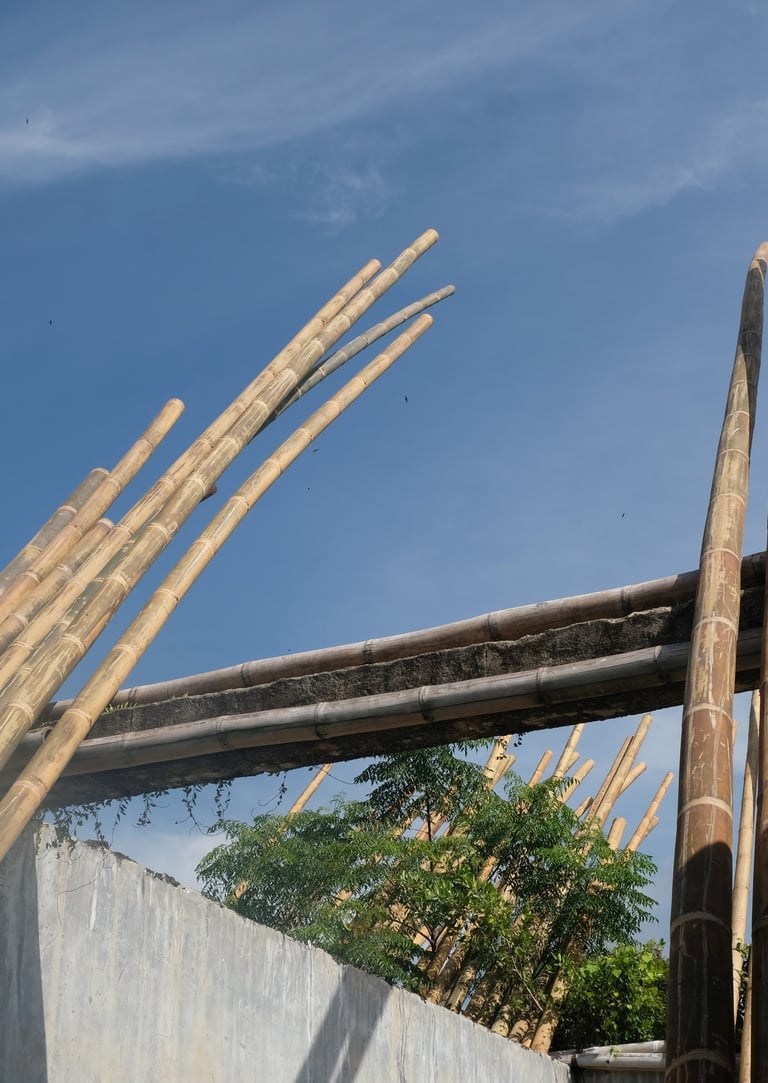
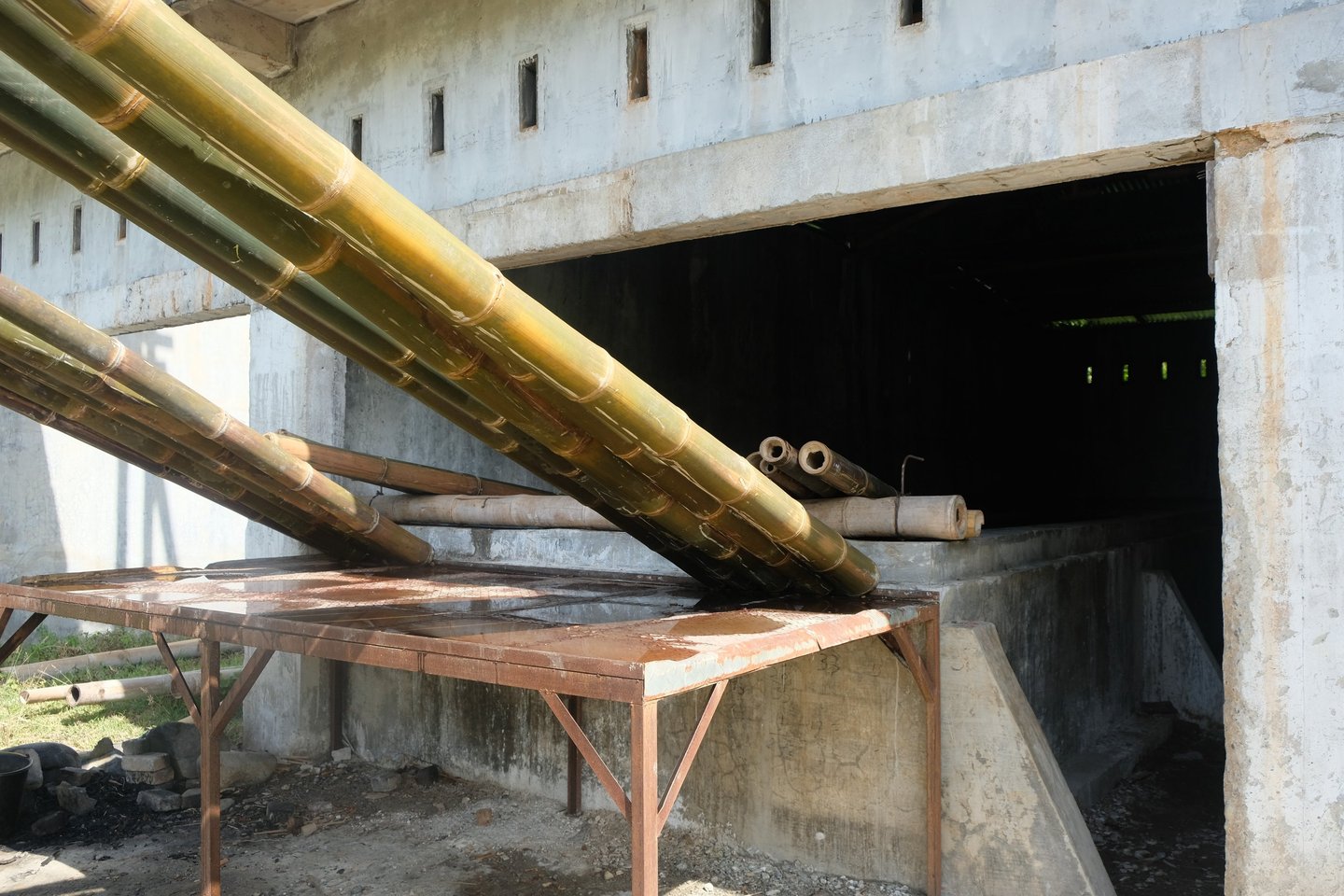
Bamboo treatment is the process of preparing and preserving bamboo to improve its durability, strength, and lifespan before it is used as a construction material or for handicrafts. Naturally, bamboo contains relatively high levels of sugar and starch, making it susceptible to termites, fungi, and insect attacks. Through the treatment process, these substances are reduced or removed, making the bamboo more durable and resistant to deterioration.
Bamboo treatment can be carried out using various methods, such as water soaking, smoking, or applying environmentally friendly preservation solutions. One of the most common methods is soaking the bamboo in a salt solution or other natural solutions for several days, followed by thorough drying.
With proper bamboo treatment, bamboo becomes more durable, more resistant to weather conditions, and safer for a wide range of applications, including construction, furniture, and environmentally friendly projects. In addition, using treated bamboo supports sustainability by reducing the need for less eco-friendly building materials and maximizing the use of this fast-growing renewable resource.




Benefits of Bamboo Treatment
Bamboo treatment offers numerous advantages that make bamboo a stronger, more durable, and reliable material for a wide range of applications, especially in environmentally friendly and sustainable projects.
First, bamboo treatment significantly improves the durability of bamboo. By reducing its natural sugar and starch content, treated bamboo becomes much more resistant to termites, fungi, and insects, preventing premature decay. Second, bamboo treatment greatly extends the lifespan of bamboo. Properly treated bamboo can last for many years, even when used in outdoor construction, without deteriorating quickly. In addition, the treatment process enhances the structural stability of bamboo, making it less likely to crack, warp, or split due to changing weather conditions.
Another important benefit is improved safety and hygiene. Treated bamboo is generally free from harmful organisms, making it more suitable for a variety of applications, including furniture, public installations, and building structures.
From an environmental perspective, bamboo treatment supports sustainability by extending the usable life of bamboo, reducing the need for harvesting new materials, and maximizing the use of this fast-growing renewable resource. Finally, bamboo treatment preserves and in some cases enhances the natural beauty of bamboo. Certain treatment methods improve its color and texture, making it an excellent choice for eco-friendly designs that combine functionality with natural aesthetics.


Bamboo Treatment Process at Project Wings
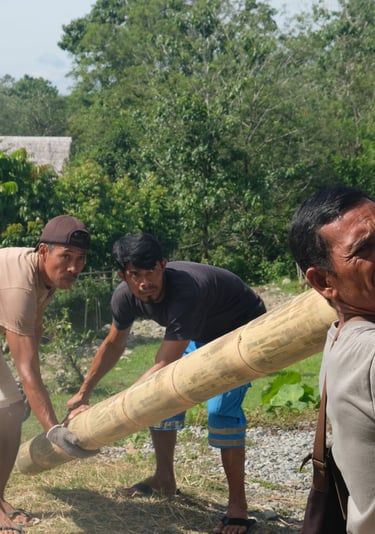
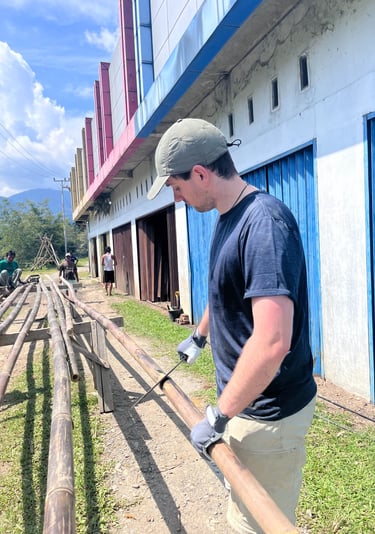
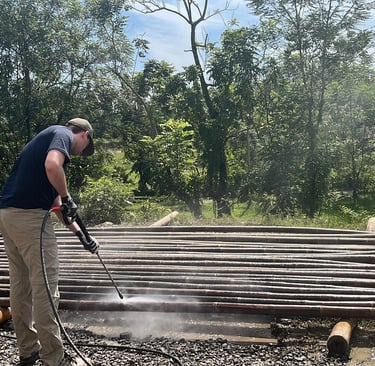
At Project Wings Sumatra, the bamboo treatment process follows an environmentally friendly, simple, and community-based approach that can be easily replicated by local communities. The process consists of the following stages:
1. Bamboo Selection
Mature bamboo is carefully selected (not too young).
Older bamboo typically has stronger and denser fibers, making it more durable.
The bamboo is harvested at the appropriate time to minimize its moisture content.
2. Cutting & Cleaning
The bamboo is cut to the required dimensions for its intended use.
Dirt, debris, and damaged outer layers are removed to prepare the bamboo for treatment.
3. Soaking (Primary Treatment)
The bamboo is soaked in water or a natural solution (such as a salt solution or other traditional treatment methods).
The purpose of this process is to remove the natural sugars and starches from the bamboo fibers, which attract insects and fungi.
Depending on the treatment method, the soaking process may take several days to several weeks.
4. Drying
After soaking, the bamboo is dried naturally.
It is placed in a shaded area with good air circulation.
Proper drying is essential to reduce moisture content and prevent mold or fungal growth.
5. Storage
The treated bamboo is stored in a dry location and kept off the ground.
Once properly stored, it is ready for use in construction, furniture, or handicraft applications.
Why This Method?
This bamboo treatment method is chosen because it is:
Environmentally friendly, with minimal use of chemicals.
Cost-effective, making it affordable for local communities.
Easy to teach and replicate, allowing local residents and volunteers to adopt the process and apply it in their own projects.
Address
Recycling Village, G4RH+X7Q, Sampe Raya, Bohorok, Langkat Regency, North Sumatra 20852
Contacts
0823-7968-8261
info@project-wings.org